Our mission is to bring Africa and Spain closer
Through outreach, educational, economic, and cultural activities, we foster mutual understanding and strengthen Hispanic African relations.
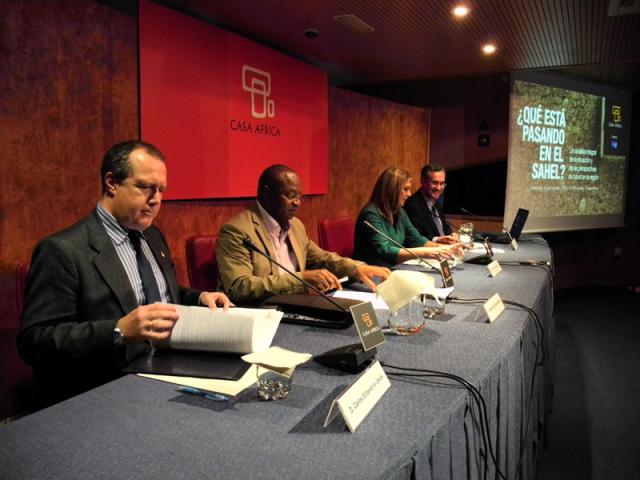
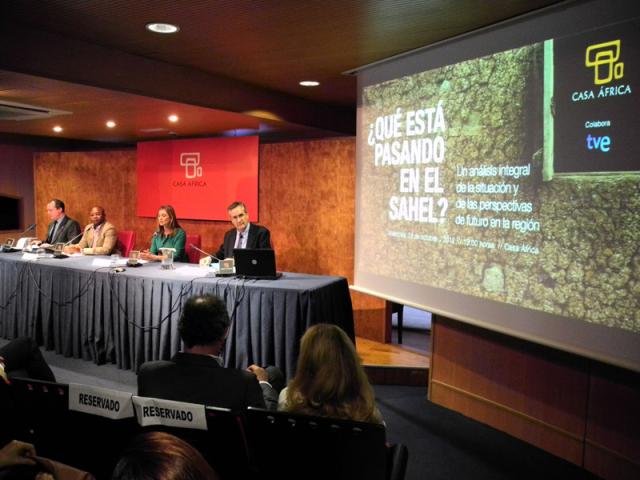
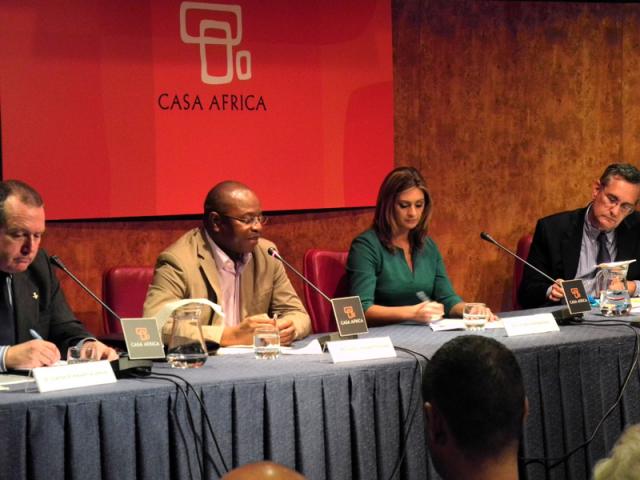
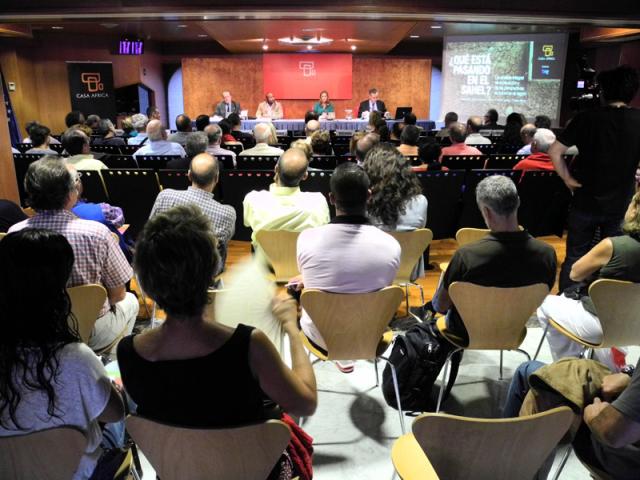
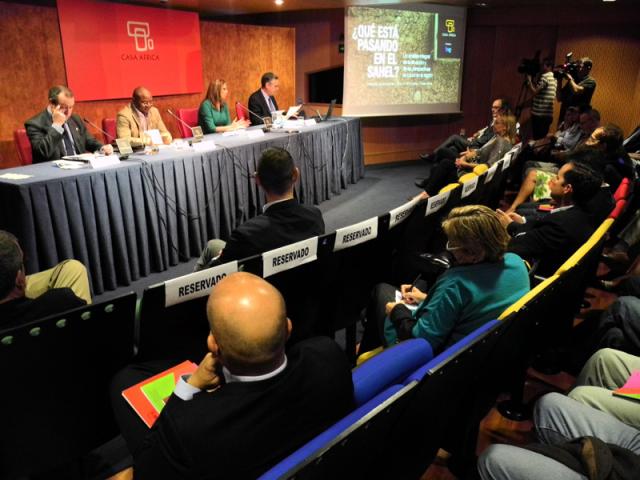
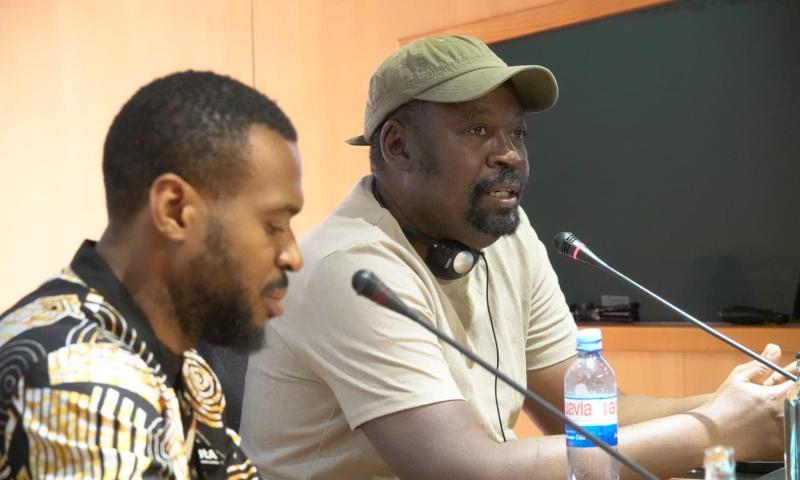
The strategy of a possible international intervention in Mali to control the Jihad groups who occupy the north of the country, the trafficking of drugs, arms and people in the Sahel area or the threat of what the situation in the Sahel could mean to the West were some of the points that were discussed yesterday at Casa África when the round table was called What is happening in Sahel? A comprehensive analysis of the situation and the future outlook in the region. The table was chaired by the journalist Cristina Almandós (TVE), and had experts Carlos Echeverría and Fernando Cardoso and the trade consultant from Mali, Mamadou Hubert Sissoko. It was attended by about a hundred people and several media outlets interested in a topic that is part of the latest news and that especially concerns the Canary Islands given its closeness to the Sahel coast. Among the findings, that the future of the region is an unknown marked by many variables, that the definition of the objectives for a possible intervention and extreme care are necessary to avoid the situation becoming even more radical and that development, employment and direct investments can be the recipe to finish off the fundamentalists and guarantee safety not only in Africa but in the rest of the world.
Carlos Echeverría, professor for International Relations at the Faculty of Politics and Sociology at the UNED and recognised international expert on Salafist Jihadist terrorism took part in the round table yesterday. Fernando Cardoso, a researcher who is a specialist on Sub-Saharan Africa and Development came to the meeting from Lisbon. Finally, the viewpoint from the ground was provided by Hubert Sissoko, a foreign trade consultant and representative for the Spanish Chambers of Commerce for Mali, Burkina Faso and Niger.